


I could talk about the Enneagram all day long, especially in relation to emotions. But the longer that I study the Enneagram, the more intrigued I become with the history of it. And as I learn more about the history of the Enneagram, I become more appreciative that I discovered it and that I developed a deep affection for the Enneagram—despite, having a deep hatred for it when I first discovered it.
[As a fan of Dante’s Inferno from The Divine Comedy, when I discovered that Dante may have had knowledge of the Enneagram when he wrote The Divine Comedy, it all made sense. It made sense that I’m deeply drawn to the meaning and the different artistic expressions of Inferno. And it made sense that I have developed an affection for the Enneagram and taken up the torch as an Enneagram Educator.]
REVIEW
Before we dive in the modern Enneagram, I want to take a moment to do a quick review of the classical Enneagram for those who may have not read the previous entry—I highly encourage that you stop right here and the entry about The Classical Enneagram first.
The history of the Enneagram is richer than some might realize. The development of the Enneagram began with Pythagoras; however, it was Ramon Llull who introduced the earliest visual representation of the nine-pointed diagram that we associate with the Enneagram. However, the Enneagram didn’t begin as a personality typology. In fact, the earliest contributors to the Enneagram were not attempting to make a personality typology… they were attempting to connect the spiritual to the mathematical.
Ramon Llull’s work with the Enneagram is where the Enneagram began to lose its mathematical roots and transition to wholly spiritual self-assessment. Llull introduced the nine-pointed diagram, “He created a diagram of nine sets of aspects in concentric circles, one of which maps to the Vices of the Enneagram.” (Integrative Enneagram Systems, “A Short and Comprehensive History of the Enneagram’s Origins”)
Although Llull introduced the nine-pointed diagram, Athanasius Kirchner’s cover of Magnum opus Arithmologia (1655) is accredited to being the first illustration that closely matches the Enneagram diagram today.
Because a 600-year gap of undocumented use of the Enneagram symbol in its modern form, George Gurdjieff is noted as the definite start of the 20th century Enneagram. George Gurdjieff (1866-1949) and P.D. Ouspensky (1878-1947) is where the transition between the Classical Enneagram and the Modern Enneagram begins.
ÓSCAR ICHAZO (1931-2020)
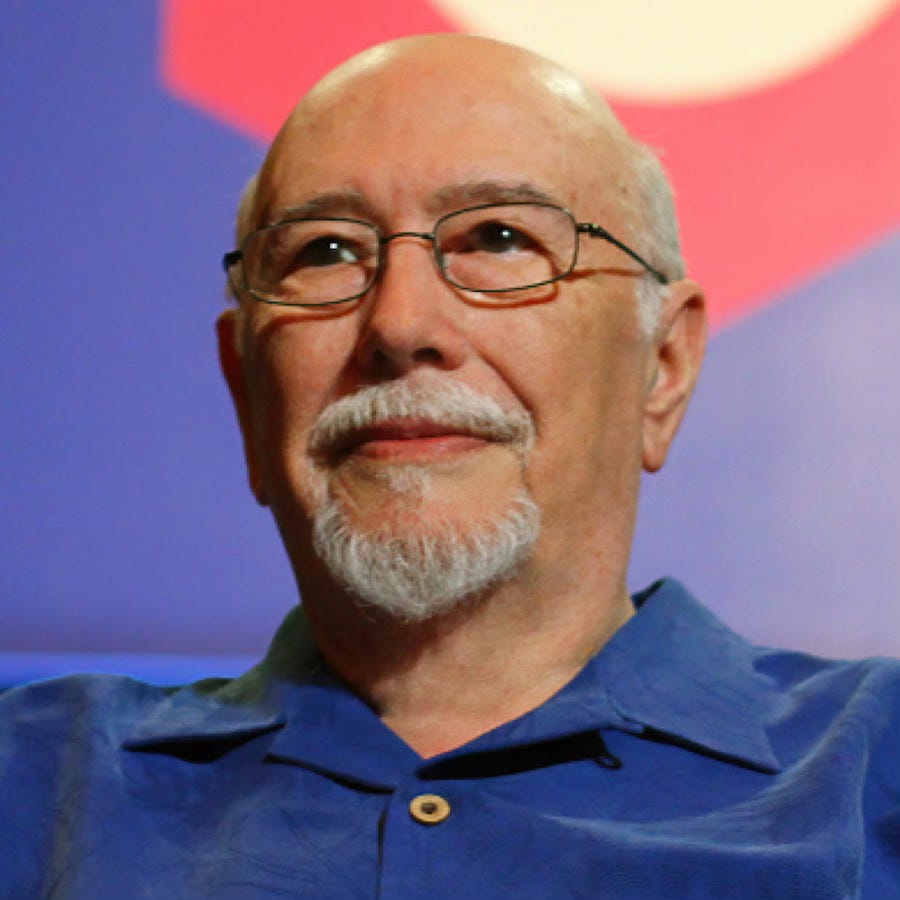
Óscar Ichazo is known as the father of The Enneagram of Personality. After inheriting his grandfather’s library from his uncle Julio, Ichazo started to read the work of Ouspensky.
In 1949, I started reading the work of Ouspensky, and in 1950 in Buenos Aires, I was invited to a closed study group… where I participated in long discussions about the work of Gurdjieff and Ouspensky. Here is where I first pointed out to this group that all the ideas proposed by Gurdjieff and Ouspensky could be traced to certain forms of Gnosticism and to specific doctrines of the Stoics, the Epicurians, and the Manichaeans. I also pointed out that we could not find any instructions in their books on how to apply the Chaldean Seal (enneagram) and that there were only vague references to music, the days of the week, etc.”
— Óscar Ichazo, “Setting the Record Straight,” Enneagram Monthly, Issue 21, November 1996.
Shortly after participating in that study group in Buenos Aires, in 1968, Ichazo began lecturing on protoanalysis(personality insights overlaid on the Enneagram symbol) under the supervision of the Chilean Psychological Association.
He taught a system he called Protoanalysis, which connected the nine points to Vices (Passions), Virtues, and ego-fixations. Central to his work was the idea that each person’s innate ‘Essence’ is obscured by an ‘Ego’ fixation developed in childhood. Ichazo provided the essential spiritual and psychological “skeleton” of the nine types, creating a powerful framework for self-realization.
— Integrative Enneagram Systems, “A Short and Comprehensive History of the Enneagram’s Origins”
Within his lectures, Ichazo taught a system of 108 Enneagrams—what he called Enneagons. Although he taught on 108, the Enneagram movement in America is based only on the first few:
Fixations — Underlying mental preoccupation for each.
Passions — The emotional energy in support of the fixation.
Virtues — What’s lacking when the passion gets in the way.
Holy Ideas — True remedy for the fixation.
Traps — The trap you fall into in seeking to overcome the fixation.
CLAUDIO NARANJO (1932-2019)
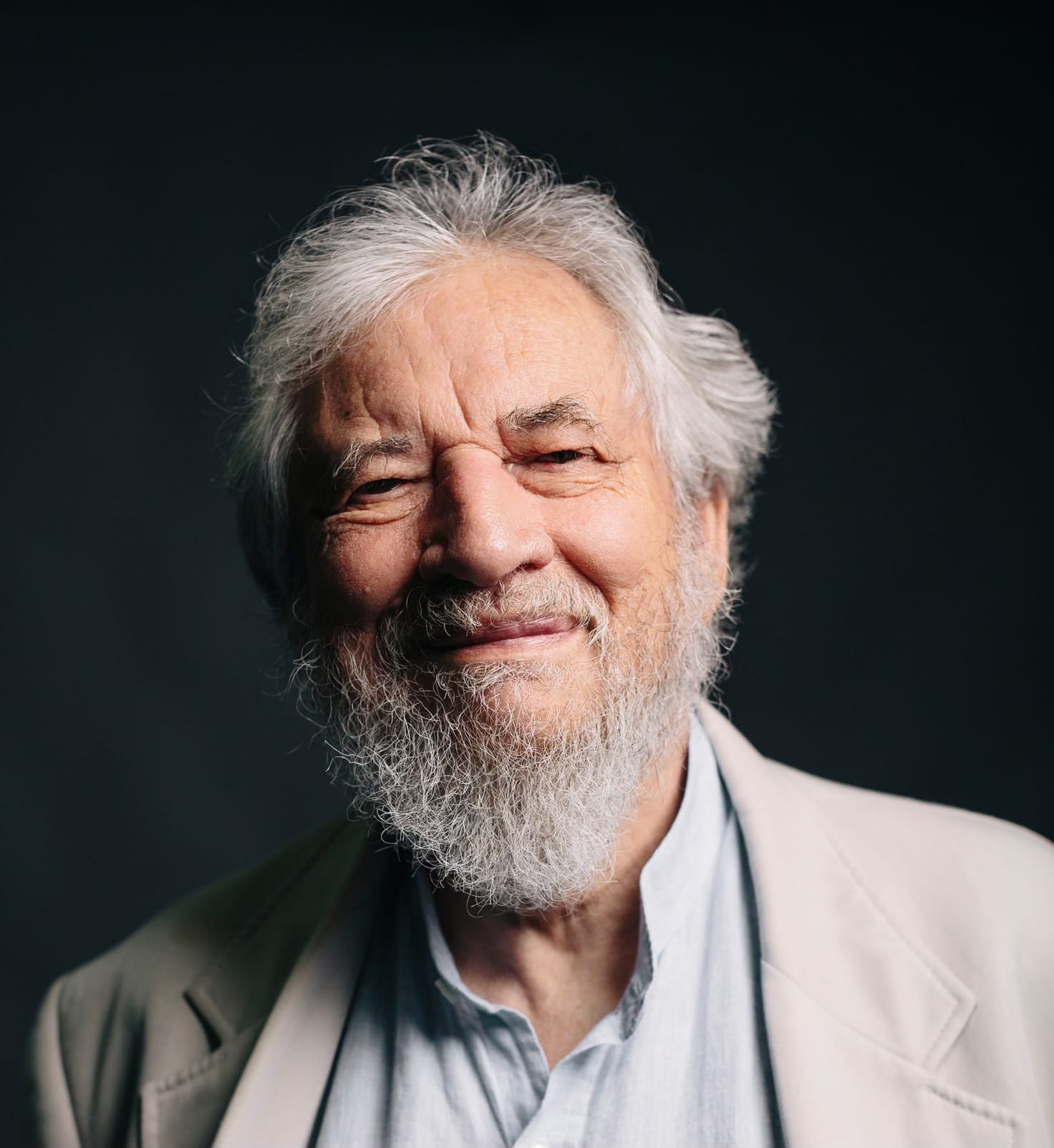
Óscar Ichazo is the father of the modern Enneagram, but Claudio Naranjo is the refiner of the Modern Enneagram (Naranjo often referred to himself as the mother of the Enneagram). Naranjo was a Chilean psychiatrist who was regarded as a pioneer of the Human Potential Movement and an innovator of the Enneagram of Personality, also known as EnneaTypes.
Naranjo took the foundation of the 27 subtype keys developed by Ichazo and made them into the 27 Subtype Character profiles that we use today.
The rich personality descriptions we use today were then developed by the Chilean psychiatrist Claudio Naranjo. After studying with Ichazo, Naranjo took this psychological ‘skeleton’ and began a monumental synthesis. He integrated Ichazo’s framework with his own extensive background in Gestalt therapy, psychoanalysis, and academic psychology to create the detailed portraits of the nine personality types. Building on the 27 subtype keys originally mapped by Ichazo, Naranjo was the one who developed them into the rich psychological 27 Subtype Character profiles we use today.
— Integrative Enneagram Systems, “A Short and Comprehensive History of the Enneagram’s Origins”
On July 1, 1970, Naranjo took fifty-four Americans (many of whom were from the Esalen Institute) to Arica, Chile to study with Ichazo. It was this group of Americans who made the Enneagram public and are the reason we know about today.
DON RISO AND RUSS HUDSON
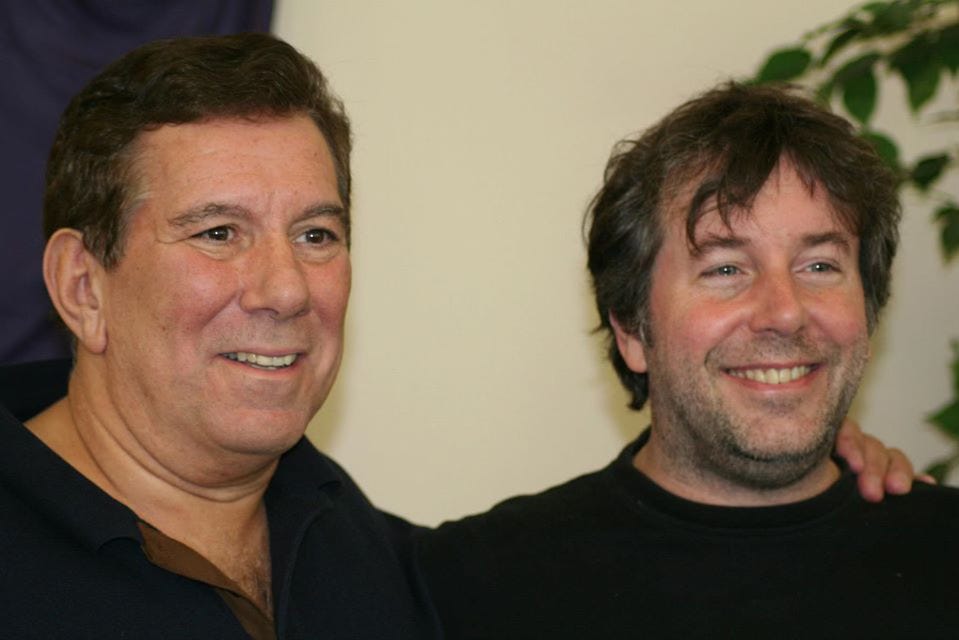
In the late 1990s, Don Riso and Russ Hudson further developed Ichazo’s and Naranjo’s work surrounding the Enneagram to give us the Enneagram that we use today.
As you can see, the Enneagram isn’t new—despite popular belief. At its origin, in c. 570 BC, it began as a way to bridge the spiritual with the mathematical. Through time it evolved from having mathematical roots to having religious roots, and then to what we know it as today and having personality/psychology roots.
And although many individuals have contributed to the making of the Enneagram, Óscar Ichazo, Claudio Naranjo, Don Riso, and Russ Hudson are arguably the most notable contributors of the Modern Enneagram. Never the less, without the work of Ichazo and Naranjo, we wouldn’t have a solid framework to understand it in modern times. And without the work of Don Riso and Russ Hudson, it may have never escalated into modern popularity.
I often look for enneagram content on Substack and tonight, typing the word, your article appeared and you had just posted it!
May I ask you to tell me something more about Dante and the enneagram? I am Italian and I am doubly curious! Thanx a lot!